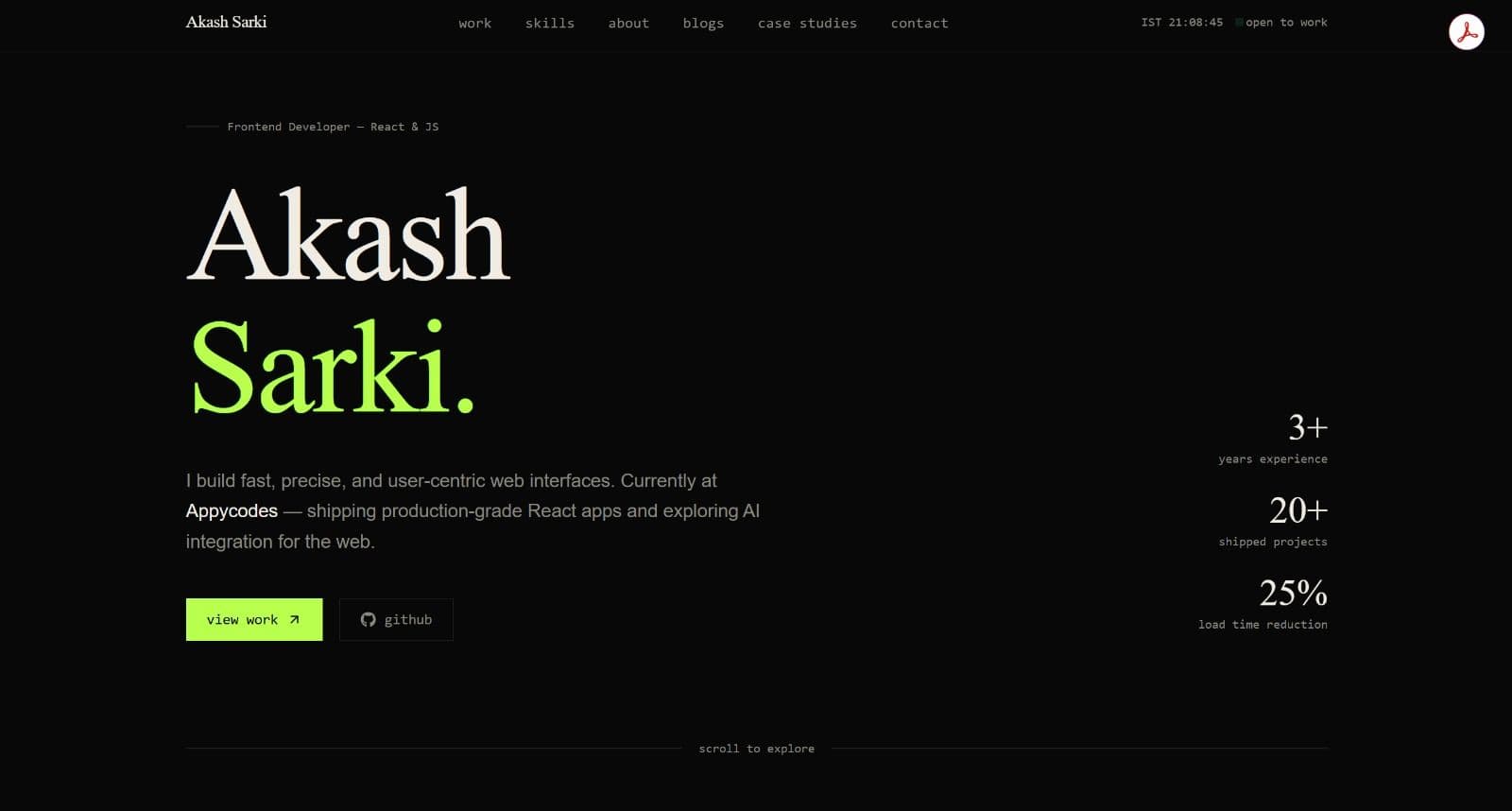

Updating My Portfolio Website
My old portfolio website looked old and I knew I had to do it someday.
It wasn't bad, but it had been a long time since I last updated it. The design no longer reflected my current skills or the kind of work I wanted to showcase.
With the help of AI, I was able to give it a modern and professional look. Here's how I did it.
The first step was creating a UI prototype. I experimented with several AI-powered design tools, but most of them generated generic layouts that didn't stand out.
After spending some time exploring different options, I came across Figma's AI features. Within seconds, it generated a UI prototype that immediately caught my attention. In fact, the very first design it produced became the foundation of the portfolio you're seeing today.
Since my portfolio is built with Next.js, I used Antigravity to convert the Figma prototype into a fully functional website. This significantly sped up the development process and allowed me to focus on refining the user experience instead of building every component from scratch.
While working on the contact section, I had another idea. Instead of using a simple contact form with a generic message, why not make the page feel more personal? After all, this website is about me. I decided to include my social links and, even better, display my latest posts from Instagram and X directly on the website.
Displaying Instagram posts was fairly straightforward. I created a Meta Developer account and used the Instagram API with my account added as a tester. Since Meta provides the necessary APIs, the integration was relatively simple.
Integrating X was a different story. X's official API is paid, so I looked for an alternative solution. I ended up using an RSS feed as a workaround. By generating an RSS feed for my X profile, I could fetch and display my latest posts without relying on the official API.
To complete the project, I bought a custom domain using my own name and deployed the website. It was the finishing touch that made the portfolio feel polished, personal, and truly my own.